
-
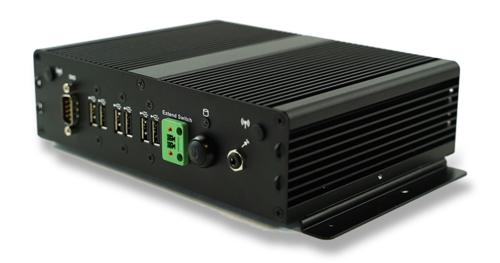
Edge AI Box – Lite
$499.00 -
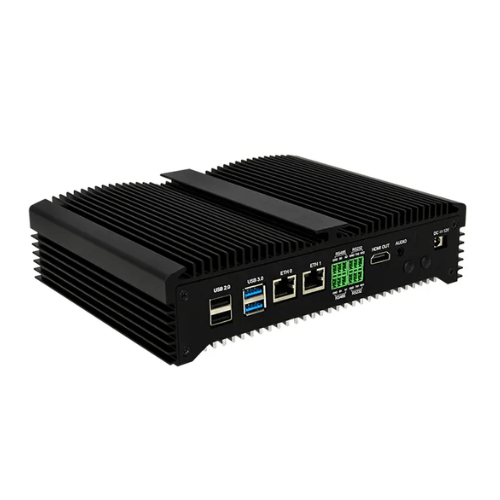
Edge AI Box – Standard
$1,499.00

-
Call / WhatsApp +60 18 383 1196
-
Any Questions info@edgeaiworks.com
Before Choosing an AI Model, Define the Vision Task First
ByDAO EDGE
Presence/Absence, Go/No-Go, Detection, Segmentation or Something More?
Industrial computer vision projects often become complicated very quickly.
A simple idea such as:
“Can the system check whether this product is correct?”
can soon turn into discussions about:
- object detection;
- segmentation;
- pose estimation;
- tracking;
- multi-task learning;
- custom models;
- more powerful edge hardware.
Sometimes those technologies are necessary.
But sometimes the project becomes difficult because the team has not yet answered a more basic question:
What decision does the business actually need from the vision system?
One reason this happens is that technical capabilities are often discussed before the required operational decision is clearly defined.
This question has appeared repeatedly across real computer vision project discussions.
In many cases, simplifying the required output can simplify the data, model, hardware and deployment at the same time.
1. Start With the Business Decision, Not the Model
Before choosing a model, it helps to define the final output as clearly as possible.
For example, does the system need to answer:
- Is the part present?
- Is the product acceptable or not?
- What type of defect is present?
- Where is the defect?
- What exact area is affected?
- Was a required process step completed?
These may sound similar, but they are different vision tasks.
The amount of technical complexity required can change significantly depending on which question actually matters.
A useful principle is:
Do not ask the vision system for more information than the operation actually needs.
If the production decision only requires:
“Pass or fail?”
then building a system that also performs detailed segmentation, classification and severity scoring may add complexity without adding business value. Before Choosing an AI Model dra…
2. Presence / Absence Can Be Much Simpler Than Full Inspection
One recurring type of project is simple component verification.
For example:
- Is the IC present in the tray position?
- Is a required component installed on the bumper?
- Is a label present?
- Is a part missing?
In these cases, the business question may simply be:
Present or absent?
That is very different from asking the system to understand every visual detail of the object.
If the only requirement is to confirm whether a known part exists in a fixed location, then the project may not need:
- pixel-level segmentation;
- complex classification;
- multiple simultaneous tasks.
This distinction matters because every additional requirement usually creates additional demands on:
- annotation;
- model complexity;
- computing resources;
- validation;
- maintenance.
A simple presence/absence task can therefore be a better starting point for an industrial PoC. Before Choosing an AI Model dra…
3. Go / No-Go Inspection Is Often a Valid First Goal
Another repeated pattern appears in quality inspection.
A company may initially imagine that the AI system needs to:
- identify the exact defect;
- classify the defect type;
- measure the defect;
- calculate severity;
- generate detailed defect information.
But sometimes the production line only needs one decision:
Is this product acceptable or not?
In one manufacturing discussion around injection-molded parts, the immediate objective was not precision dimensional inspection.
The practical goal was much simpler:
Go / No-Go.
The system needed to help determine whether a product should continue through production or be rejected.
That narrower objective can change the entire project.
Instead of asking:
“Can the AI understand every possible defect?”
the question becomes:
“Can the system reliably separate acceptable parts from unacceptable parts?”
That does not make the problem easy.
But it makes the project definition much clearer. Before Choosing an AI Model dra…
4. Detection and Segmentation Should Serve Different Business Needs
Another common source of unnecessary complexity is annotation.
Teams often ask:
Should we use bounding boxes or polygons?
But the more useful question is:
What information does the final application actually need?
If the system only needs to know:
“A defect exists here,”
then a bounding box may provide enough information.
If the business needs:
- the exact shape;
- the exact affected area;
- a precise boundary;
- area-based severity;
then segmentation may become necessary.
A real discussion about road and pavement damage raised exactly this kind of question.
Because the camera viewed the scene at an angle, the developer was considering:
- standard bounding boxes;
- rotated boxes;
- polygons.
The technical question was valid.
But underneath it was a more important product question:
Does the application need an approximate location, or does it need the exact defect geometry?
Without answering that first, it is difficult to decide which annotation method is justified. Before Choosing an AI Model dra…
5. More AI Components Do Not Automatically Create a Better System
Another repeated pattern is the temptation to add more capabilities.
For example, a package-counting project may begin with a fairly clear objective:
Count packages moving through a process.
But the design may quickly grow into:
- object detection;
- pose estimation;
- tracking;
- person detection;
- hand detection;
- package detection.
Each added component may have a reason.
But together they create a more complex system with more possible failure points.
The same principle appeared in another project.
A visual assistant initially aimed to:
observe a human demonstration, understand the procedure and later detect whether the process was performed correctly.
That is a very broad problem.
After discussion, the scope became much narrower:
monitor a predefined packaging process and check whether specific known steps were completed.
The technical challenge moves from:
“Understand arbitrary human procedures”
to:
“Verify a fixed sequence of known actions.”
The second problem is much more clearly defined. Before Choosing an AI Model dra…
6. Multi-Task Models Can Expose Poor Task Definition
A recent tomato-leaf disease project showed another version of the same problem.
The model attempted to perform several tasks in one system:
- detection;
- classification;
- segmentation;
- severity estimation.
The architecture itself was sophisticated.
But the underlying labels did not support all of those tasks equally well.
For example, the available “segmentation” masks were effectively filled leaf-level regions rather than accurate lesion masks.
That created a mismatch.
The project wanted to estimate disease severity based on lesion area, but the annotation did not actually describe the lesion area accurately.
The problem was therefore not simply:
“Which model architecture should be used?”
It was also:
Does the available label contain the information required by the task?
If the project needs severity based on actual lesion area, then the data must support that requirement.
If it does not, adding another model head does not create the missing information. Before Choosing an AI Model dra…
7. Define the Smallest Task That Produces the Required Business Result
Reducing the scope does not necessarily make the project less advanced.
A narrower task can make it easier to answer:
- What exactly counts as success?
- What data is needed?
- What should be annotated?
- How should the result be validated?
- What level of false positives is acceptable?
- What hardware is actually required?
For example:
“Detect every possible production error”
is difficult to define.
But:
“Check whether this required component is present before the next station”
is much clearer.
Likewise:
“Understand any operator procedure”
is vague.
But:
“Verify whether Step A, Step B and Step C occurred in order”
is measurable.
This does not mean every project should be reduced to a binary decision.
It means the complexity should come from the business requirement, not from the desire to use more AI techniques.
Before discussing the model, it helps to answer five practical questions:
1. What decision is required?
Is the required output:
- Present / Absent?
- Pass / Fail?
- Defect type?
- Defect location?
- Exact defect area?
- Count?
- Process step completed or missed?
2. Who will use the result?
Will it be used by:
- an operator;
- a quality engineer;
- a PLC;
- an alarm system;
- a production dashboard?
3. What happens after the decision?
For example:
- reject the product;
- stop the machine;
- alert an operator;
- save an image;
- record a defect;
- generate statistics.
4. How much precision is actually necessary?
Does the process need:
“There is a defect in this area”
or:
“The exact defect boundary covers 3.2% of the surface”?
Those are very different technical requirements.
5. Does the available data support the required output?
If the business needs segmentation but the dataset only contains whole-object boxes, the project has a data-definition problem before it has a model problem. Before Choosing an AI Model dra…
8. Define the Task Before Choosing Edge Hardware
Task definition also affects edge hardware.
A fixed-camera presence/absence application may have very different computing requirements from a system performing:
- segmentation;
- pose estimation;
- tracking;
- multiple models;
- multiple camera streams.
So the question:
“Which Edge AI Box should we use?”
may be too early.
A better sequence is:
Business decision
↓
Vision task
↓
Required data / annotation
↓
Model complexity
↓
Camera and video requirements
↓
Edge hardware
The hardware should support the task.
The task should not be redesigned simply because a particular piece of hardware is available. Before Choosing an AI Model dra…
Conclusion
Across different computer vision projects, one problem appears repeatedly:
The technical solution starts becoming complex before the business output is clearly defined.
A presence/absence task becomes segmentation.
A simple Pass/Fail inspection becomes multi-class defect analysis.
A package-counting system grows into detection, tracking and pose estimation.
A workflow check becomes a general visual assistant.
A multi-task model attempts to produce outputs that the available labels do not actually support.
The practical lesson is not:
“Always use the simplest model.”
It is:
Use the simplest vision task that reliably produces the business result you actually need.
Before choosing YOLO, segmentation, pose estimation, tracking or a larger Edge AI Box, first ask:
What exact decision should the system make?
That question can save more time than choosing the model first and trying to simplify the project later. Before Choosing an AI Model dra…
Discuss Your Industrial Computer Vision Project
If you are evaluating a computer vision project but are unsure whether the task should be Presence/Absence, Go/No-Go, Detection, Segmentation or a more complex workflow, the first step is to define the required business output.
Useful information for an initial evaluation may include:
- what object, defect or process needs to be checked;
- what decision the system should produce;
- sample images or short video;
- whether the camera position is fixed;
- what should happen after detection;
- the required speed or number of camera streams.
