
-
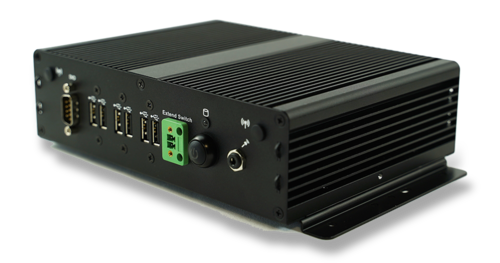
Edge AI Box – Lite
$499.00 -
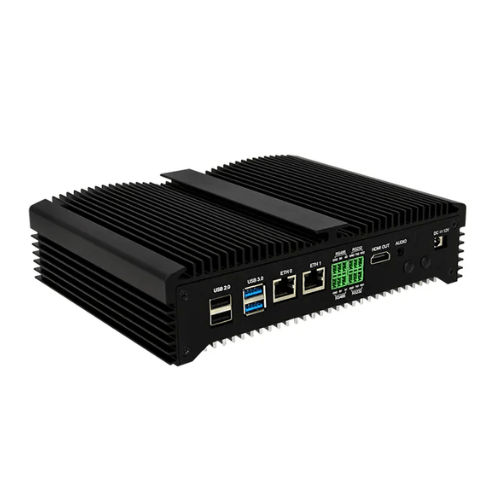
Edge AI Box – Standard
$1,499.00

-
Call / WhatsApp +60 18 383 1196
-
Any Questions info@edgeaiworks.com

Industrial Defect Detection With Limited Defect Data: What Should You Consider Before Deployment?
ByDAO EDGE
Industrial Defect Detection With Limited Defect Data: What Should You Consider Before Deployment?
Introduction
Industrial defect detection is one of the most promising applications of computer vision in manufacturing.
The concept sounds straightforward:
A camera captures images of products, an AI model analyzes them, and defective products are identified automatically.
But real production environments often present a difficult problem:
There may simply not be enough real defect data to train a reliable AI model.
A mature production line may manufacture hundreds of thousands of parts while producing only a relatively small number of genuine defects.
Those defects may then be divided into several categories, leaving only a handful of examples for some defect types.
And simply waiting months — or even longer — to collect enough defects may not be practical for a real industrial project.
So the real question becomes:
How can an industrial defect detection project move forward when real defect samples are limited?
The answer is not necessarily a more powerful AI model.
Before choosing the model, camera system, or Edge AI platform, it is important to understand what the inspection process actually needs to achieve.
1. A Good Production Line Can Create a Difficult AI Problem
Traditional supervised learning generally benefits from having many labeled examples.
Industrial defect detection can create the opposite situation.
A mature manufacturing process may have a very low defect rate.
For example, a production line may generate hundreds of thousands of normal products but only a few hundred defective samples over a long period.
Those defects might then be divided into different categories:
- Scratches
- Cracks
- Surface contamination
- Dents
- Missing components
- Deformation
- Other manufacturing defects
Some categories may contain many examples, while others may have very few.
This creates two related challenges:
Limited defect data and class imbalance.
A model may have difficulty learning reliable characteristics for defect categories represented by only a small number of samples.
So one of the first questions before starting an industrial inspection project should be:
How much real defect data is actually available?
The answer may influence the entire AI strategy.
2. Do You Really Need to Classify Every Defect Type?
When designing an AI inspection system, it is tempting to define every possible defect category from the beginning.
But that may not always match the real production requirement.
Suppose the actual requirement is simply:
Is this product acceptable or potentially defective?
In that case, attempting to classify every defect into six or seven categories may introduce unnecessary complexity — especially when some categories have very limited training data.
A more practical initial objective could sometimes be:
Normal vs. Defective
rather than:
Scratch vs. Crack vs. Dent vs. Contamination vs. Deformation vs. Other
Detailed defect classification can still be added later if the production process requires it.
This does not mean binary classification is always the correct approach.
The important point is that the AI task should reflect the actual operational requirement.
Before designing the model, consider:
- Does the system only need to identify whether a defect exists?
- Does it need to determine the exact defect category?
- Does the defect type affect downstream production decisions?
- Is detailed classification required for quality reporting?
- Could human inspectors classify rare defects after the AI system flags them?
Sometimes simplifying the initial objective can make the project much more practical.
3. Detection or Segmentation: How Much Precision Is Actually Needed?
Another important question is how precisely the system needs to locate a defect.
Some projects begin with image segmentation because segmentation provides pixel-level information about the defect area.
However, pixel-level accuracy also increases annotation requirements.
When defect samples are already limited, creating detailed masks can consume significant time and resources.
For some industrial applications, the actual requirement may simply be:
A defect exists approximately here.
In that case, bounding-box detection may provide sufficient information.
Segmentation
Segmentation provides detailed pixel-level defect regions.
It may be useful when:
- Precise defect dimensions are required
- Defect area must be measured
- Detailed surface analysis is necessary
Object Detection
Object detection provides an approximate defect location using a bounding box.
It may be sufficient when:
- Operators only need to know where the defect is
- The product simply needs to be removed for further inspection
- Detailed defect boundaries are not operationally important
The most technically detailed approach is not automatically the most practical one.
The required level of AI precision should be determined by the production process.
4. Can Anomaly Detection Help When Defect Samples Are Rare?
When there are many normal samples but very few defect samples, anomaly detection may be worth evaluating.
Instead of learning every possible defect category, an anomaly detection system can learn what a normal product looks like and identify visual patterns that differ from normal production.
This can be useful when:
- Normal samples are easy to collect
- Genuine defects are rare
- New defect types may appear
- It is difficult to define every possible defect category in advance
However, anomaly detection introduces another important challenge:
Not every anomaly is a real defect.
A real production environment may contain harmless visual variations such as:
- Slight changes in product position
- Lighting variation
- Reflections
- Dust or contamination on a lens
- Camera vibration
- Surface texture differences
- Small process variations
An anomaly detection system may identify some of these as unusual even though the product itself is acceptable.
This creates false positives.
And in a real factory, false positives are not simply an AI metric.
They become an operational problem.
5. False Positives Can Determine Whether a System Is Actually Usable
A model may look impressive during a demonstration but become difficult to use on a production line.
Imagine an inspection system processing thousands of products every day.
Even a relatively small false-positive rate may generate a significant number of unnecessary alerts.
The QA team then needs to review those alerts manually.
If operators repeatedly discover that many AI alerts are harmless variations, confidence in the system may gradually decrease.
This is why industrial AI performance should not be evaluated only by model accuracy.
The project should also consider:
- False-positive rate
- False-negative rate
- Number of alerts per shift
- Manual review workload
- Cost of missing a real defect
- Cost of incorrectly rejecting a good product
The acceptable balance depends on the application.
For some critical defects, detecting as many potential defects as possible may be the priority.
For other applications, excessive false alarms may make the system operationally impractical.
There is also another useful way to think about false positives:
They can become valuable production data.
If operators review flagged images and record whether each case is a real defect or a harmless variation, those examples can gradually become part of a production-specific dataset.
Instead of treating every false alarm only as a failure, the project can also use that feedback to improve future performance.
6. Synthetic Defect Data Can Help — But It Has Limitations
When real defects are difficult to collect, synthetic data is an obvious option to explore.
Artificial scratches, cracks, stains, or other defect patterns can be added to normal product images to expand the training dataset.
More advanced approaches may also use generative models to create synthetic defect examples.
Synthetic data can potentially help with:
- Increasing sample diversity
- Supporting rare defect categories
- Early model development
- Testing different AI approaches
However, there is an important risk.
If artificial defects do not realistically represent actual manufacturing defects, the model may learn characteristics of the synthetic generation process rather than characteristics of real defects.
Differences in:
- Surface texture
- Lighting
- Defect boundaries
- Reflections
- Material properties
may cause synthetic defects to behave differently from genuine production defects.
So the important question is not simply:
Can we generate more defect images?
It is:
Do those generated defects represent the real variations the system will encounter on the production line?
Synthetic data should therefore be evaluated against real production samples whenever possible.
7. Consider a Human-in-the-Loop Deployment Strategy
When defect data is limited, the first AI model does not necessarily need to be treated as the final system.
Instead, the initial deployment can also become part of the data collection process.
A possible workflow could be:
Camera
↓
Initial Detection / Anomaly Detection
↓
Potential Defect Flagged
↓
QA Review
↓
Real Defect / False Alarm
↓
Feedback Stored
↓
Dataset Improves Over Time
This creates a feedback loop.
The AI system identifies suspicious products, while human inspectors provide real operational feedback.
Over time, the project can accumulate:
- Genuine defect examples
- False-positive examples
- Difficult production cases
- New defect categories
- Environmental variations
These samples can then support future model improvement.
This changes the question from:
“Do we have enough data to build the perfect model today?”
to:
“Can we design a system that improves as real production data is collected?”
For some industrial projects, this may be a much more realistic way to begin.
The first deployment does not always need to solve every defect category perfectly.
A practical first-stage system may focus on identifying suspicious products, supporting QA review, and collecting difficult real-world cases.
As production data grows, the detection strategy can then be refined based on actual factory conditions.
8. The Camera Environment Still Matters
Limited training data is not the only challenge.
The quality and consistency of image acquisition can significantly affect defect detection performance.
Before focusing entirely on AI models, several practical factors should be evaluated.
Camera Position
Can the camera consistently capture the inspection area?
Lighting
Are reflections, shadows, or changing ambient light affecting the image?
Product Positioning
Does the product appear in approximately the same position each time?
Resolution
Are small defects represented by enough pixels for reliable detection?
Production Speed
How much time is available to capture, process, and respond to each image?
Triggering
How is image capture synchronized with the production process?
A more controlled imaging environment can reduce unnecessary visual variation and make the AI problem easier.
In some projects, improving image acquisition may provide more value than increasing model complexity.
9. Translate the Inspection Requirement Into Edge AI Requirements
Once the inspection strategy is understood, the computing requirements become much easier to define.
An industrial Edge AI system may need to process:
- One or multiple cameras
- High-resolution images
- Object detection models
- Segmentation models
- Anomaly detection models
- Multiple AI stages
- Real-time production signals
The required computing performance depends on questions such as:
- How many cameras are involved?
- What camera resolution is required?
- What frame rate is necessary?
- How complex is the AI workload?
- What inference latency is acceptable?
- Does the system require local data storage?
- Does it need to communicate with a PLC, MES, SCADA, or other production system?
For example, a single-camera inspection task with a relatively simple model may have very different computing requirements from a multi-camera system combining anomaly detection, classification, and real-time production integration.
This is why Edge AI platform selection should be based on the actual inspection workload and deployment environment.
The AI workload should determine the computing platform — not the other way around.
10. Questions to Answer Before Starting the Project
Before deploying an industrial defect detection system with limited defect data, it is useful to clarify five areas.
Inspection Objective
- What defects actually need to be detected?
- Does the system need defect classification?
- Is approximate location sufficient?
- Is pixel-level segmentation really necessary?
Available Data
- How many normal samples are available?
- How many real defect samples exist?
- How many defect categories are there?
- How imbalanced are those categories?
Production Environment
- What camera system is currently installed?
- Is lighting controlled?
- Is product positioning consistent?
- What is the production speed?
Operational Requirements
- What false-positive level can the QA team tolerate?
- What happens when the AI identifies a potential defect?
- Will a human review uncertain cases?
- Can operator feedback be stored for future model improvement?
Deployment Requirements
- Is inference required in real time?
- Should processing happen locally?
- How many cameras need to be processed?
- Does the system need integration with existing factory systems?
These questions often matter more than choosing an AI model at the beginning of the project.
Start With the Inspection Problem
Industrial defect detection with limited defect data is not simply a model-selection problem.
It is a system-design problem involving:
Inspection requirements
↓
Available data
↓
Camera and lighting conditions
↓
AI strategy
↓
Human review
↓
Edge computing
↓
Production system integration
A successful deployment does not necessarily begin with the most advanced AI model.
It begins by understanding what the production line actually needs the AI system to accomplish.
How DAO EDGE Can Help Evaluate a Defect Detection Project
At DAO EDGE, we believe the first step is to understand whether an industrial vision project is practical under the actual production conditions.
For an initial evaluation, useful information may include:
- Product or component images
- Examples of normal and defective products
- Defect types you want to detect
- Approximate number of available defect samples
- Camera model or sample images/video
- Production line speed
- Required detection response time
- Acceptable false-positive level
- Number of cameras
- Existing PLC, MES, SCADA, or other system integration requirements
Based on this information, we can help evaluate questions such as:
- Whether the available data may support supervised detection
- Whether anomaly detection may be worth evaluating
- Whether the initial defect categories should be simplified
- Whether detection or segmentation is actually required
- How camera and lighting conditions may affect the project
- Whether a human-in-the-loop approach may be practical
- What Edge AI computing requirements the application may need
The purpose of the initial evaluation is not to choose the most powerful AI model.
It is to identify a practical path from the current inspection problem toward a deployable system.
Discuss Your Industrial Defect Detection Project
If you are evaluating an industrial visual inspection project and are unsure whether the available data, camera environment, or AI approach is suitable, you can share the basic project information with us for an initial discussion.
