
-
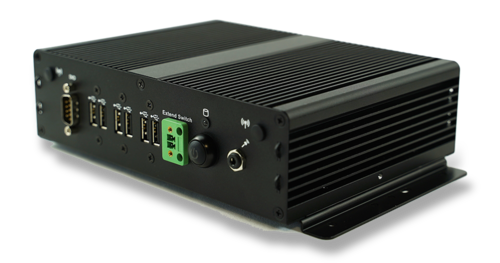
Edge AI Box – Lite
$499.00 -
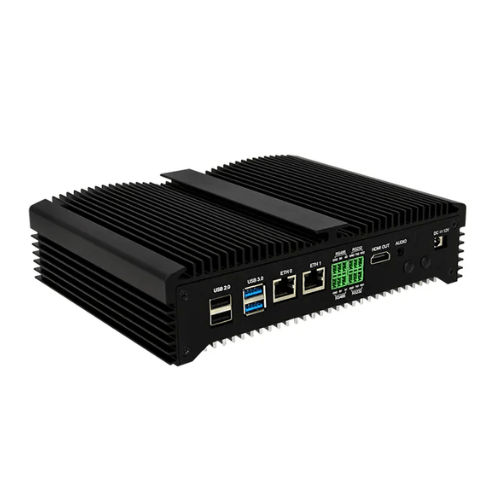
Edge AI Box – Standard
$1,499.00

-
Call / WhatsApp +60 18 383 1196
-
Any Questions info@edgeaiworks.com

Before Building a PPE Detection System: 5 Things Every Industrial Project Should Consider
ByDAO EDGE
Before Building a PPE Detection System: 5 Things Every Industrial Project Should Consider
Introduction
PPE (Personal Protective Equipment) detection has become a common computer vision application for industrial safety.
The concept appears straightforward:
A camera monitors workers, an AI model identifies safety equipment such as helmets, safety vests, gloves, or other protective gear, and the system generates an alert when required PPE is missing.
But moving from a successful computer vision demonstration to a reliable real-world deployment is much more difficult.
Research on PPE detection continues to highlight practical challenges such as changing illumination, occlusion, viewing angles, worker movement, small objects, and computing constraints.
This means the first question should not simply be:
“Which Edge AI box should we use?”
A better question is:
“What does this application actually require?”
Before selecting cameras, AI models, or computing hardware, here are five areas worth evaluating.

1. A Successful AI Demo Does Not Always Mean Successful Deployment
Many computer vision projects begin with an impressive demonstration.
A model may successfully detect:
- Safety helmets
- Safety vests
- Workers
- Restricted areas
under controlled conditions.
But industrial environments are rarely controlled.
The actual site may introduce:
- Different lighting conditions
- Different camera angles
- Moving workers
- Crowded scenes
- Changing backgrounds
- Different detection distances
A model that performs well on test images may therefore require additional data, testing, and optimization before it can operate reliably at the deployment site.
For this reason, hardware selection should not necessarily be the first step.
Understanding the real operating environment should come first.
2. Camera Placement and Occlusion Can Determine What the Model Can See
Occlusion is a common challenge in real-world computer vision systems.
Workers may stand close together. Machinery may block part of a person. Materials may cover PPE, and workers may turn away from the camera.
When important visual information is hidden, the AI model has less information available for detection.
Before deployment, it is therefore useful to evaluate:
Camera position
- Where will the cameras be installed?
- What viewing angles are available?
- How far are workers from the cameras?
- Which areas actually require monitoring?
Working environment
- How many workers may appear in the same frame?
- Are workers frequently moving?
- Can machinery or materials obstruct the camera view?
- Are additional camera angles required?
In some projects, improving camera placement may provide more practical benefit than simply increasing AI computing performance.
3. Lighting Conditions Can Change Detection Performance
Lighting is another important deployment variable.
A model may perform well with clear and consistent images but encounter difficulties when the operating environment changes.
Industrial sites can include:
- Bright sunlight near entrances
- Strong shadows
- Poorly illuminated areas
- Reflections from metal surfaces
- Different indoor lighting
- Night-time operation
These conditions can change the appearance of the same object considerably.
For this reason, evaluating real images or video from the deployment site is valuable before finalizing the system.
Possible factors to consider include:
- Camera sensor quality
- Lens selection
- Exposure control
- Image resolution
- Low-light requirements
- Actual site conditions represented in the training data
The AI model is only one component of the complete vision system.
4. Small PPE Items Become Much Harder to Detect at Distance
Not every PPE item presents the same detection challenge.
Larger and visually distinctive items such as helmets and safety vests may be easier to detect than smaller items such as:
- Safety glasses
- Gloves
- Ear protection
- Harness hooks
- Other small protective equipment
As the distance between the worker and camera increases, these objects occupy fewer pixels in the image.
This can increase the risk of missed detections or unstable results.
Before deployment, the project should therefore define:
- Which PPE items must be detected?
- What is the expected camera-to-worker distance?
- What camera resolution is available?
- What level of detection performance is required?
These requirements can significantly influence camera selection, model design, and computing requirements.
5. Decide Where AI Processing Should Run Only After Understanding the Workload
Once the application requirements are clear, the next question is where inference should run.
Depending on the project, processing may happen:
- In the cloud
- Directly inside an AI-enabled camera
- On a local server
- On an Edge AI device
Each architecture has different trade-offs.
Cloud processing may provide centralized computing resources, but network bandwidth, latency, privacy, and connectivity may need to be considered.
Local Edge AI processing can reduce network dependency and support real-time processing near the cameras, but the required hardware depends heavily on the workload.
Important questions include:
- How many camera streams need to be processed?
- What resolution and frame rate are required?
- Which AI models will run?
- Is continuous real-time inference necessary?
- Are multiple AI functions required simultaneously?
- Does the system need to integrate with an existing NVR, VMS, or CCTV system?
Not every PPE detection project requires an Edge AI box.
The appropriate architecture should be determined by the application rather than selecting hardware first.
Questions to Answer Before Starting a PPE Detection Project
Before purchasing hardware or beginning deployment, it can be useful to clarify three groups of requirements.
Application
- What safety problem are you trying to solve?
- Which PPE items need to be detected?
- Where will the system operate?
- What happens after a violation is detected?
Video Source
- Are existing CCTV or IP cameras available?
- What resolution and frame rate do they provide?
- How many camera streams are involved?
- Can sample images or video from the actual site be provided?
System Requirements
- Is real-time processing required?
- Is local processing preferred?
- Are there network or privacy restrictions?
- Does the system need to integrate with existing CCTV, NVR, VMS, or other software?
These answers help determine whether the project may require an AI camera, an Edge AI device, a local server, a cloud architecture, or a customized combination.
Why Project Evaluation Should Come Before Hardware Selection
A more powerful Edge AI box does not automatically create a better computer vision system.
Successful deployment requires several parts of the system to work together:
- Application requirements
- Camera environment
- Training data
- AI workload
- Computing hardware
- Software integration
For example, additional computing performance cannot recover visual information that the camera never captured.
Likewise, a model trained on conditions very different from the actual deployment environment may require additional data and optimization regardless of the hardware used.
The goal should therefore be to identify the deployment constraints first and select the technology second.
How DAO EDGE Approaches Edge AI Projects
At DAO EDGE, we believe industrial computer vision projects should begin with the application rather than the hardware.
Before recommending an Edge AI device or deployment architecture, we focus on understanding:
- What needs to be detected
- Where the cameras are installed
- What video sources are available
- How many streams require processing
- What response time is required
- What environmental constraints exist
- How the system needs to integrate with existing infrastructure
Once these requirements are understood, it becomes much easier to evaluate the appropriate camera, model, computing platform, and deployment approach.
Evaluating a PPE Detection Project?
If you are currently evaluating PPE detection for a factory, warehouse, construction site, or other industrial environment, you can share the basic project information with us.
Useful information includes:
- Application environment
- PPE items to be detected
- Existing camera model or sample video
- Number of camera streams
- Approximate detection distance
- Required response time
- Existing NVR, VMS, or CCTV infrastructure
We can review the initial requirements and discuss what type of deployment approach may be suitable.
A successful Edge AI deployment starts with understanding the problem first.
The hardware comes later.
